Most people searching for the best workout for weight loss are really asking a different question: What can I actually stick with long enough to see results?
That distinction matters. Almost any exercise burns calories. The problem is rarely finding something that works on paper — it’s finding something that works in practice, week after week, when motivation fades and the initial excitement wears off.
This is where kickboxing offers a different approach.
Kickboxing for weight loss works not just because of the calorie burn — though that’s significant — but because it’s engaging enough to keep people coming back. And consistency, more than any single workout metric, is what drives lasting change.
Why Kickboxing Burns More Than a Treadmill
A full hour of class burns roughly 400–600 calories for most adults, depending on bodyweight and how hard you work the rounds. That puts it in the same range as a steady jog, with a few advantages that go beyond the number.
Why Kickboxing Burns More Than Most Workouts
Full-Body Engagement
A kickboxing class doesn’t isolate muscle groups. Every combination involves your legs, core, shoulders, arms, and back working together. A roundhouse kick generates power from the ground through the hips. A jab-cross-hook sequence engages the shoulders, torso rotation, and legs simultaneously.
This full-body activation means more muscle fiber recruitment per movement, which translates directly to higher calorie burn.
Sustained Intensity With Natural Intervals
Kickboxing classes typically alternate between high-intensity combinations and active recovery. You throw a series of punches and kicks at high output, then reset. This pattern mirrors interval training — which research consistently shows is more effective for fat loss than steady-state cardio.
The difference is that in kickboxing, these intervals happen naturally. You’re not watching a timer or forcing yourself through arbitrary work-rest cycles. The structure of the training creates the intervals organically.
Anaerobic and Aerobic Training Combined
Running is primarily aerobic. Weight lifting is primarily anaerobic. Kickboxing is both.
Sustained movement keeps your heart rate elevated (aerobic). Explosive combinations — a hard kick, a fast flurry of punches — push into anaerobic territory. This combination creates what exercise scientists call excess post-exercise oxygen consumption (EPOC), which means your body continues burning calories at an elevated rate after the workout ends.
This afterburn effect is more pronounced with mixed aerobic-anaerobic training than with either type alone.
How Kickboxing Compares to Other Popular Workouts
Kickboxing vs. Running
Running is effective and accessible, but it has limitations for weight loss. It’s repetitive, which creates both injury risk and boredom. Many people start a running program for weight loss and stop within weeks because it feels like punishment.
Kickboxing engages the mind differently. Learning combinations, reacting to coaching cues, and working on technique create mental engagement that running often lacks. This makes sessions feel shorter and more enjoyable, which directly impacts whether people keep showing up.
Running also primarily works the lower body. Kickboxing distributes the workload across the entire body, which supports more balanced muscle development and higher overall calorie expenditure.
Kickboxing vs. Traditional Gym Workouts
Gym routines — machines, free weights, treadmills — are effective tools. But they require self-direction, which is where many people struggle. Deciding what to do, managing rest periods, maintaining intensity, and staying motivated alone is a lot to manage.
Kickboxing classes provide structure. A coach leads the session. The group creates energy. The class has a beginning, middle, and end. For many people, this format removes the decision fatigue that makes gym workouts inconsistent.
Kickboxing vs. HIIT Classes
HIIT and kickboxing share similarities — both use interval-style training and both produce significant calorie burn. The key difference is skill development.
HIIT classes typically involve generic exercises: burpees, mountain climbers, box jumps. These serve their purpose, but they don’t teach you anything beyond the workout itself.
Kickboxing develops real skills. You learn to throw punches and kicks with proper technique. You develop coordination, timing, and body awareness. This skill progression creates motivation that generic exercise classes often can’t sustain.
The Weight Loss Benefits Beyond Calories
Lean Muscle Development
Kickboxing builds functional, lean muscle throughout the body. More muscle mass raises your basal metabolic rate — the number of calories your body burns at rest. This creates a compounding effect: the fitter you become through kickboxing, the more efficiently your body manages weight even when you’re not training.
This is different from the muscle that heavy weight training builds. Kickboxing develops muscle that’s integrated with movement — functional strength that improves how your body works overall.
Stress Reduction
Stress contributes to weight gain through elevated cortisol levels, poor sleep, and emotional eating. The connection between chronic stress and weight management is well-documented.
Kickboxing is uniquely effective at reducing stress. There’s something genuinely cathartic about hitting pads and heavy bags. The physical release, combined with the mental focus required during training, creates a reset that many other workouts don’t provide.
Lower stress supports better sleep, more consistent eating patterns, and improved hormonal balance — all of which contribute to weight management.
Improved Relationship With Exercise
Many people who struggle with weight have a complicated relationship with exercise. It feels like obligation. Something to endure for the result.
Kickboxing changes this for a lot of people. When exercise becomes something you look forward to — when you’re genuinely excited to train — the entire dynamic shifts. You stop counting calories burned and start showing up because you want to.
This shift from obligation to enjoyment is perhaps the most important factor in long-term weight management.
Setting Realistic Expectations
Here’s what actually matters when using kickboxing for weight loss:
Timeline
Visible changes typically begin within 4-8 weeks of consistent training (3 sessions per week). Significant transformation takes 3-6 months. These timelines vary based on starting point, nutrition, and individual factors.
Progress isn’t linear. Some weeks the scale moves. Some weeks it doesn’t. Body composition changes — more muscle, less fat — sometimes happen without the scale changing at all.
Nutrition Still Matters
No workout outpaces a poor diet. Kickboxing creates a calorie deficit and builds muscle, but nutrition determines whether that deficit leads to meaningful results.
The good news: people who train consistently tend to make better food choices naturally. When you’re investing effort in your fitness, eating in ways that support that effort starts to make sense.
Sustainability Over Intensity
Crash diets and extreme exercise programs produce fast results that don’t last. The weight returns because the approach isn’t sustainable.
Kickboxing works differently. It’s something people maintain for months and years, not weeks. The weight loss it produces tends to be gradual and lasting — the kind that comes from genuine lifestyle change rather than temporary restriction.
What to Look for in Kickboxing Near Me
If you’re considering kickboxing for weight loss, the gym you choose matters. Look for:
Structured classes with warm-up, technique instruction, and conditioning
Qualified coaches who teach proper form (this prevents injury and maximizes effectiveness)
A welcoming environment for all fitness levels — not just experienced fighters
Bag work and pad work — hitting something real makes a meaningful difference
Consistent schedule that fits your life so you can train regularly
Avoid programs that are purely cardio kickboxing with no technical instruction. The skill development component is part of what makes kickboxing sustainable and effective.
What a Typical Kickboxing Class Looks Like
For those who’ve never tried it, here’s what to expect:
Warm-up (10-15 minutes): Dynamic movement, jump rope, shadowboxing. Your heart rate rises gradually.
Technique instruction (10-15 minutes): The coach introduces or refines combinations. You practice with focus on form.
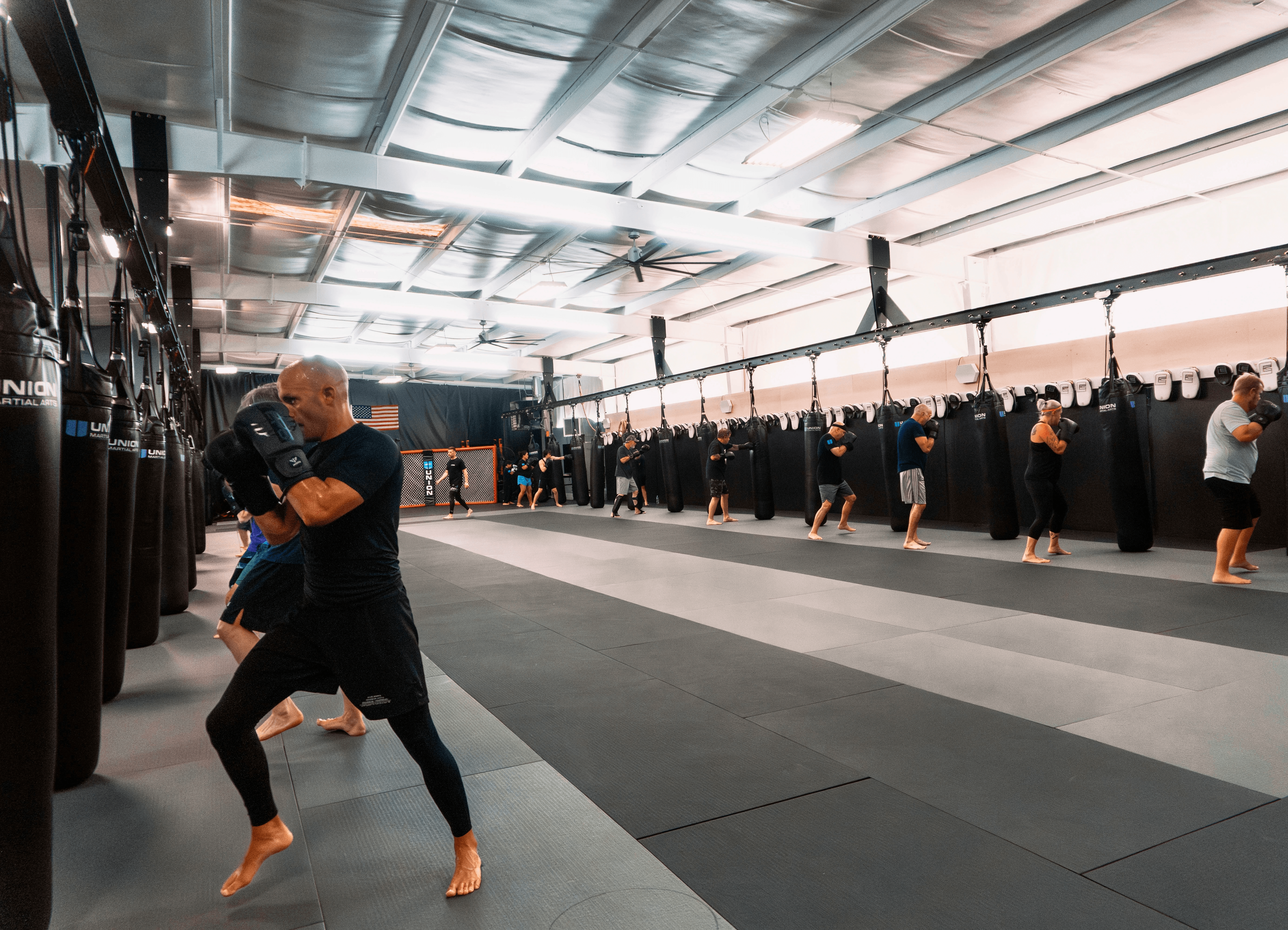
Rounds (20-30 minutes): The main work. Rounds on heavy bags, pad work with partners, or combination drills at high intensity with rest periods between rounds.
Conditioning/cool-down (5-10 minutes): Core work, stretching, or light movement to finish.
The entire session typically lasts 45-60 minutes. Most people are surprised by how quickly it goes.
Who Kickboxing Works For
Kickboxing for weight loss works across a wide range of people:
Adults returning to fitness after a long break
People who’ve tried gyms and found them boring
Those who want structure without the monotony of repetitive cardio
Anyone who responds better to coaching than self-directed workouts
It doesn’t require existing fitness. Beginners start at their own pace and build capacity over time. The classes scale naturally — you hit as hard as you can, move as fast as you can, and that’s enough.
Frequently Asked Questions
How many times per week should I do kickboxing to lose weight?
Three sessions per week is a solid starting point for weight loss. Check our class schedule to find times that work for you. This provides enough training stimulus to build fitness and burn significant calories while allowing adequate recovery. Some people train more frequently as their conditioning improves, but three sessions weekly produces meaningful results for most people.
Can beginners do kickboxing for weight loss?
Yes. Kickboxing classes at well-run gyms are designed to accommodate beginners alongside more experienced students. Coaches modify intensity and complexity based on experience level. The most important thing is showing up consistently — technique and fitness develop together over time.
Is kickboxing better than running for weight loss?
Both are effective. Kickboxing burns about the same per hour, engages more muscle groups, and offers higher retention rates because people find it more enjoyable. Running has the advantage of requiring no equipment or gym membership. For many people, kickboxing produces better long-term results because they’re more likely to keep doing it.
Will kickboxing make me bulky?
No. Kickboxing builds lean, functional muscle — not the bulk associated with heavy weight training. Most people who train kickboxing consistently develop a leaner, more toned physique. The muscle you build actually helps with weight management by increasing your resting metabolism.
How soon will I see results from kickboxing?
Most people notice improved energy and mood within the first two weeks. Physical changes — better muscle tone, weight loss, improved body composition — typically become visible within 4-8 weeks of training three times per week. Significant transformation happens over 3-6 months.
Do I need to be in shape to start kickboxing?
No. Kickboxing builds fitness — you don’t need to arrive with it. Classes scale to your current ability. Many people who start kickboxing training come in with little or no exercise background and build their conditioning through the training itself.
Union Martial Arts offers adult kickboxing classes in Indian Trail and the greater Charlotte metro area. Our classes combine real technique instruction with high-intensity training — building skills and fitness together.
If you’re curious, the best next step is simple: try a class and see how it feels.

