Every January, millions of people set new year fitness goals. Many sign up for a gym, commit to a routine, and genuinely intend to follow through. By February, many of those same people have fallen off.
Of course, there are disciplined runners, experienced lifters, and athletes who thrive on self-directed training. But for a large number of adults, traditional gym routines fall short — not because of a lack of effort or willpower, but because solo training doesn’t provide enough structure, engagement, or long-term momentum.
This is where martial arts training offers a different approach.
The Retention Challenge With Traditional Gyms
Studies consistently show that a majority of new gym memberships go unused within the first few months. This isn’t a reflection of motivation — it’s a reflection of design.
Most gyms are built for independent training. That model works well for people who already know what they’re doing, but it often leaves beginners without the support they need to stay consistent.
Common challenges include:
Limited accountability — No one notices if you skip a session
Minimal skill progression — Progress is measured mostly by numbers
Lack of community — You train near people, not necessarily with them
Low engagement — Repetition without learning becomes hard to sustain
When comparing martial arts vs gym training, the difference becomes clear. Martial arts addresses these issues by design.
Why Martial Arts Works for New Year Fitness Goals
You Learn a Real Skill
At a traditional gym, progress is often tracked through weight, reps, or distance. Those metrics matter — but they don’t always create a sense of growth that keeps people engaged.
In martial arts, every class teaches something new. A technique. A movement pattern. A defensive concept. You’re not just exercising — you’re learning.
After a few months, the progress is tangible. You move better. You react faster. You understand something today that you didn’t before. These skills don’t disappear when you stop training — they stay with you.
Classes Have Structure and Purpose
Many gym sessions depend entirely on self-planning. What should I do today? How hard should I push? What comes next?
Martial arts classes remove that friction.
Each class follows a clear structure: warm-up, instruction, drilling, application, and cool-down. Every part has a purpose. You don’t need to design your workout or guess what matters — you simply show up and train.
This structure is especially valuable for beginners. You can start immediately without feeling lost or behind.
Accountability Is Built In
When you miss a gym session, nothing changes.
In a martial arts class, people notice. Training partners expect you. Coaches know your name. Your presence matters. At Union Martial Arts, we often reach out if someone misses class — simply to check in and offer support and motivation.
This creates natural accountability through connection and community. Consistency becomes easier because you’re part of something, not just following a routine on your own.
The Workout Happens as a Byproduct
Kickboxing and Jiu-Jitsu classes routinely burn 400–600 calories per hour while developing full-body strength, coordination, and conditioning. These are demanding workouts.
The difference is where your attention goes.
Instead of counting reps or watching the clock, you’re focused on learning, timing, and execution. Fitness improves as a result of engagement, not discipline alone.
This is why martial arts works so well for adults who haven’t enjoyed traditional exercise in the past. The effort becomes sustainable because the training itself is engaging. Learn more about the fitness benefits of martial arts.
What to Expect as a Complete Beginner
If you’ve never trained before, it’s normal to feel uncertain about your first class. At a well-run martial arts school, beginners are expected.
You won’t be thrown into sparring on day one. You’ll learn the basics at a manageable pace and build confidence gradually. Consistency matters more than intensity. Showing up at least twice per week produces real, lasting results.
Curious what your first session will look like? Read our guide on what to expect on your first day.
Choosing the Right Style for Your Goals
Different martial arts emphasize different benefits:
Kickboxing — High-energy training that develops cardio, builds strength, supports weight loss, and is highly effective for stress relief
Jiu-Jitsu — Grappling-based training that builds functional strength and develops a deep understanding of self-defense and problem-solving under pressure
MMA — A comprehensive approach that blends striking and grappling into a well-rounded skill set
For many adults starting with new year fitness goals, kickboxing offers the easiest entry point. The movements are intuitive, the workouts are effective, and progress comes quickly.
If you’re wondering whether age is a factor, it’s not — read Is 30 Too Old to Start MMA? for a clear answer.
The Real Advantage: You Want to Keep Going
This is where martial arts quietly outperforms most fitness options.
People who train consistently don’t rely on guilt or motivation. They look forward to class. Learning, improvement, and shared effort create momentum.
Over time, training becomes a practice — something you return to because it challenges you in a meaningful way. That’s why martial arts students often stay consistent for years, not weeks.
How to Start
If you’re considering martial arts for your new year fitness goals, a simple approach works best:
Find a school that welcomes beginners — Look for structured classes and trial options
Commit to two sessions per week — This is enough to build momentum
Focus on learning, not performance — Progress comes from repetition
Give it eight weeks — Skills take time to develop
January is a good time to start. Classes are structured for new students, and your body is ready to adapt.
Frequently Asked Questions
Is martial arts good for weight loss?
Yes. Kickboxing, Jiu-Jitsu, and MMA combine cardio and resistance training, burning roughly 400–600 calories per hour while building lean muscle.
Can I start with no experience?
Absolutely. Most adult students begin with no background. Classes are designed to accommodate beginners while still challenging experienced students.
Is martial arts better than going to the gym?
For many people, martial arts provides structure, accountability, skill progression, and engagement that traditional gyms aren’t designed to provide consistently. The training and community become the motivation.
How often should beginners train?
Two to three sessions per week is ideal. Consistency matters more than intensity.
What should I wear to my first class?
Comfortable athletic clothing without zippers or buttons. Most classes train barefoot. Equipment is typically provided for trial classes.
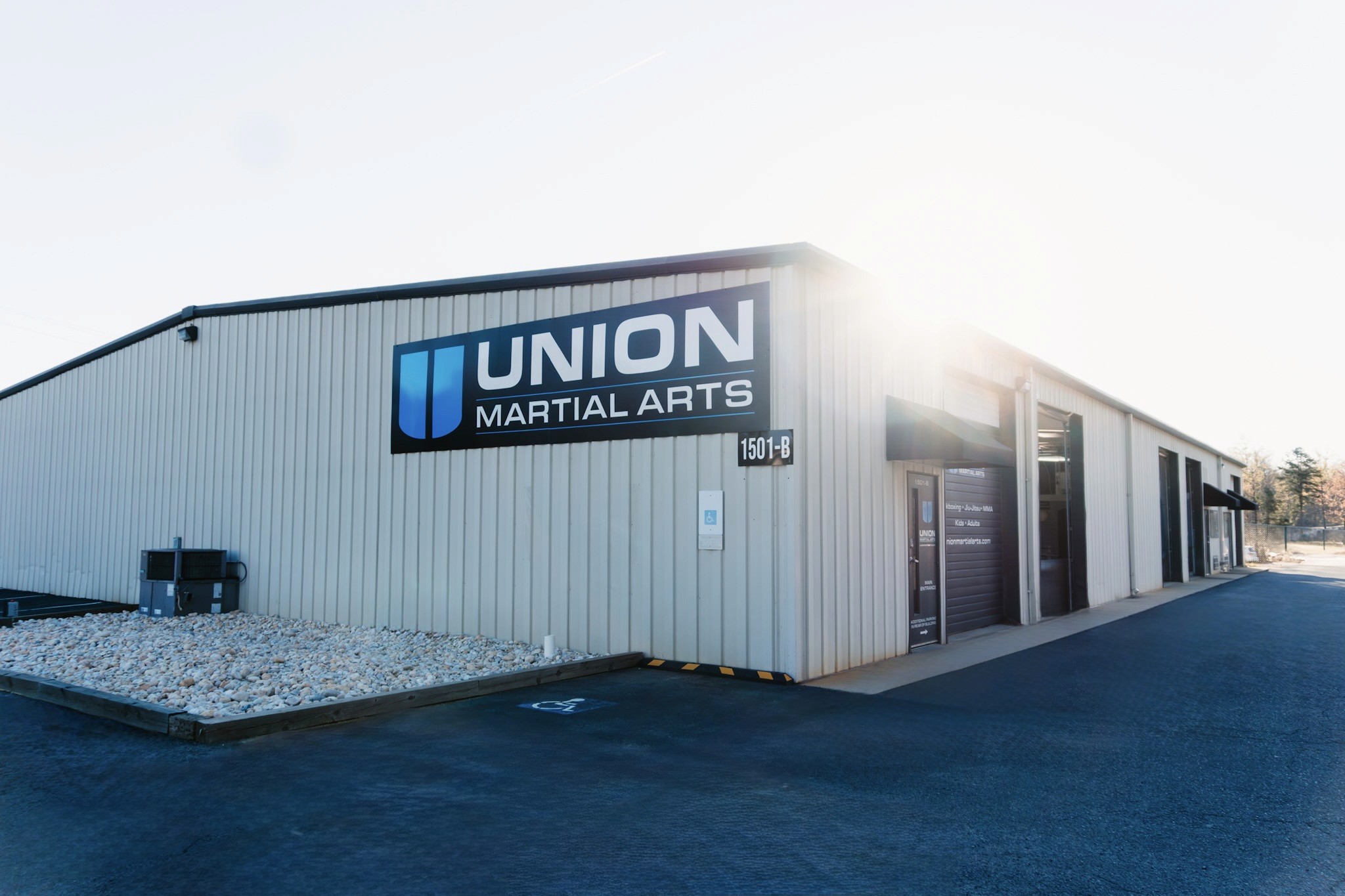
Union Martial Arts offers Kickboxing, Jiu-Jitsu, and MMA classes for kids and adults in Union County, NC. Classes are designed for all experience levels, from complete beginners to experienced students.
If you’re curious, the best next step is simple: try a class and see how it feels.

