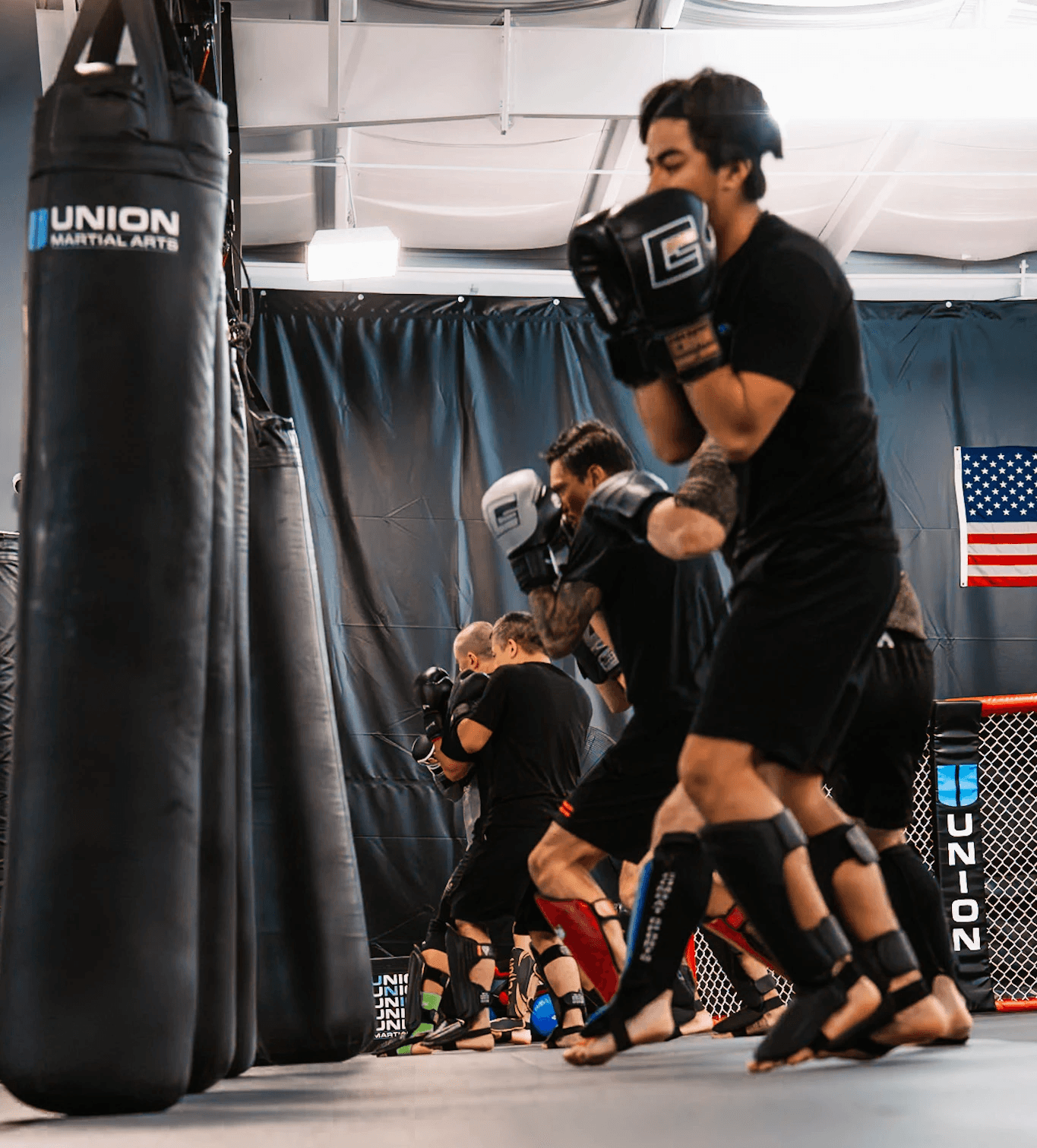
The Complete Guide to Martial Arts Benefits
Martial arts training offers benefits that extend far beyond learning to punch or grapple. For many people — adults and children alike — it becomes a practice that improves physical health, mental clarity, and personal development in ways that few other activities can match.
This guide covers what martial arts actually delivers, based on what we see in students who train consistently over months and years.
Physical Benefits of Martial Arts
Full-Body Conditioning
Unlike workouts that isolate specific muscle groups, martial arts training engages the entire body. A single Kickboxing or Jiu-Jitsu class involves:
Cardiovascular work — Sustained movement that elevates heart rate
Strength training — Bodyweight exercises, resistance from partners, and repetitive striking
Flexibility — Dynamic stretching and movements through full ranges of motion
Coordination — Complex movements that require timing and body awareness
This combination produces well-rounded fitness that translates to everyday life. Students often notice they move better, recover faster, and feel more capable in their bodies.
Weight Management
Martial arts classes typically burn 400–600 calories per hour, depending on bodyweight, intensity, and style. Kickboxing and Jiu-Jitsu tend toward the higher end due to constant movement.
More importantly, martial arts builds lean muscle mass, which increases resting metabolism over time. This makes weight management more sustainable than cardio-only approaches.
Functional Strength
The strength developed through martial arts is practical. You learn to generate power from your hips, maintain balance under pressure, and control your body in awkward positions.
This functional strength matters for daily activities — lifting, carrying, maintaining posture — and becomes increasingly valuable as people age.
Improved Mobility and Balance
Training involves constant movement through different positions. Over time, this improves:
Hip mobility (critical for kicks and ground work)
Shoulder flexibility (important for grappling)
Core stability (essential for everything)
Balance and proprioception (knowing where your body is in space)
Many students arrive with stiffness from desk work or previous injuries. Consistent training gradually restores range of motion that seemed permanently lost.
Mental and Emotional Benefits
Stress Relief
Physical exertion is a proven stress reducer. Martial arts adds another dimension: the training demands complete focus.
When you’re learning a technique or working with a partner, there’s no mental space for work problems or daily anxieties. For an hour, your attention is fully absorbed. Many students describe this as meditative — a break from the constant mental chatter of modern life.
Confidence That Comes From Competence
There’s a difference between confidence that’s given and confidence that’s earned.
Martial arts builds the second kind. As skills develop, as techniques that once seemed impossible become reliable, students experience genuine growth. This isn’t about being told you’re capable — it’s about proving it to yourself through effort.
This earned confidence tends to extend beyond the gym. Students often report feeling more comfortable in unfamiliar situations, more willing to take on challenges, and less intimidated by difficulty.
Mental Resilience
Training is hard. Progress is slow. You will get tired, confused, and occasionally frustrated.
This is part of the benefit.
Learning to work through discomfort — to show up when you don’t feel like it, to keep drilling when progress feels invisible — builds mental toughness that applies everywhere. Students learn that struggle is part of growth, not a sign of failure.
Focus and Presence
Martial arts requires attention. A wandering mind leads to missed techniques, slower reactions, and more difficulty learning.
Over time, students develop better concentration. They learn to be present during training, which often carries over to work, relationships, and other areas where focus matters.
Self-Defense Skills
Practical Ability
Learning to defend yourself is a legitimate reason to train. Martial arts provides real skills:
Awareness — Understanding distance, positioning, and threat recognition
Technical ability — Knowing how to strike, clinch, take down, or control an attacker
Composure under pressure — The ability to think and act when stressed
These skills develop gradually through controlled practice. Sparring and live drilling simulate pressure without serious risk, building the ability to perform when it matters.
Appropriate Response
Good martial arts training also teaches restraint. Students learn to control situations without excessive force, to de-escalate when possible, and to respond proportionally to threats.
Benefits for Children
Discipline and Self-Control
Children in martial arts learn to follow instructions, wait their turn, and control their impulses. These lessons are built into the structure of every class.
Unlike environments where discipline is imposed externally, martial arts helps children develop internal self-regulation. They learn that controlling themselves leads to better results — in training and in life.
Physical Development
Children who train develop:
Coordination and motor skills
Strength
Body awareness and spatial understanding
Healthy habits around physical activity
These benefits matter especially for kids who spend significant time in front of screens. Martial arts provides an active outlet that’s engaging enough to compete with digital entertainment.
Social Skills
Training partners become friends. Classes create a community of peers working toward similar goals.
Children learn to work with others, to be good training partners, and to support their teammates. Shy children often open up as they become comfortable in the environment. Overly energetic children learn to channel their energy productively.
Confidence Without Arrogance
Children in martial arts develop confidence through achievement. They earn their progress through effort, which creates a grounded sense of self-worth.
Good programs emphasize respect alongside ability. Students learn that being capable doesn’t mean being superior — it means having responsibility to use their skills appropriately.
Benefits for Adults
Physical Fitness Without Boredom
Many adults struggle with traditional exercise because it lacks engagement. Running on a treadmill or lifting weights can feel repetitive.
Martial arts solves this problem. Every class involves learning, problem-solving, and interaction with training partners. The workout happens as a byproduct of engaging activity rather than as the sole focus.
This makes consistency easier. People look forward to training rather than dreading it.
Social Connection
Adult life can be isolating. Work, family obligations, and the loss of built-in social structures (like school) leave many people without strong community ties.
Martial arts provides genuine connection. Training partners become friends through shared effort. The community aspect keeps people coming back even on days when motivation is low.
Continuous Learning
Adults rarely get opportunities to be genuine beginners at something challenging. Most of life involves applying existing skills rather than developing new ones.
Martial arts offers the experience of learning something completely new. This is humbling, frustrating, and ultimately rewarding. Many adults find that being a beginner again — and improving through effort — is deeply satisfying.
Stress Management
The demands of adult life create chronic stress that affects health, relationships, and well-being. Martial arts provides:
A physical outlet for accumulated tension
Mental focus that interrupts stress cycles
Accomplishment that counteracts feelings of stagnation
Community that reduces isolation
These benefits compound over time. Regular training becomes a reliable anchor in an often unpredictable life.
Long-Term Benefits
Sustainable Practice
Unlike activities that become harder with age, martial arts can be adapted for lifelong practice. Intensity adjusts. Focus shifts from athleticism to technique. Training remains valuable and accessible.
Many practitioners train well into their 60s and beyond, maintaining fitness, sharpness, and community that decline rapidly for those who stop moving.
Cumulative Skill Development
Skills in martial arts don’t plateau the way fitness gains often do. There’s always more to learn, more refinement possible, more depth to explore.
This creates a practice with endless room for growth — something that remains engaging for years rather than becoming routine.
Community and Identity
For many people, martial arts becomes part of who they are. The gym becomes a second home. Training partners become close friends. The practice provides structure, purpose, and belonging.
This is perhaps the most underrated benefit: martial arts offers a place to be, people to be with, and something meaningful to do.
Choosing the Right Style
Different martial arts emphasize different benefits:
Kickboxing — Excellent for cardio, stress relief, and weight loss. High energy, relatively accessible for beginners.
Jiu-Jitsu — Emphasizes technique over athleticism. Great for problem-solving, functional strength, and practical self-defense.
MMA — Combines striking and grappling for comprehensive skill development. More demanding but highly effective.
The best choice depends on individual goals, preferences, and what feels engaging. Many people try multiple styles before finding their focus.
Getting Started
If you’re considering martial arts, a few principles help:
Find a school that welcomes beginners — The environment matters as much as the style
Commit to consistency — Two sessions per week is enough to see real progress
Focus on learning, not performance — Early awkwardness is normal and temporary
Give it time — Benefits compound over months, not days
The barrier to starting is usually psychological, not physical. Most people who walk through the door discover they’re more capable than they expected.
Frequently Asked Questions
What are the main benefits of martial arts?
The primary benefits include improved physical fitness, stress relief, self-defense skills, increased confidence, and community connection. For children, add discipline, focus, and social development.
Is martial arts good for weight loss?
Yes. Training burns roughly 400–600 calories per hour while building lean muscle, which increases resting metabolism. Combined with the consistency that comes from engaging training, martial arts supports sustainable weight management.
What age can you start martial arts?
Most children can begin around age 5, depending on readiness. Adults can start at any age — 30, 40, 50, or beyond. Training adapts to different abilities and goals.
How long until I see benefits?
Physical improvements often appear within weeks. Noticeable skill development typically takes 3–6 months of consistent training. Long-term benefits — confidence, resilience, community — build over years.
Is martial arts safe?
Recreational martial arts training has lower injury rates than many common sports. Good programs emphasize controlled practice, proper progression, and respect between training partners.
Union Martial Arts offers Kickboxing, Jiu-Jitsu, and MMA classes for kids and adults in Union County, NC. Classes are designed for all experience levels, from complete beginners to experienced practitioners.
If you’re curious, the best next step is simple: try a class and see how it feels.

